

Learn how to apply the Feynman Technique to enhance your understanding and retention, leading to mastery in exams through effective deep learning strategies.
How to Master Your Exams with the Feynman Technique: A Deep Learning Approach
Estimated reading time: 7 minutes
Unlock the secrets to effortless learning and exam mastery using the Feynman Technique. Discover how this simple method can transform your studying experience.
In the pursuit of academic excellence, students often find themselves wrapped in a web of complex formulas, verbose explanations, and endless theories. Yet, amidst this chaos, the Feynman Technique shines as a beacon of clarity. Popularized by physicist Richard Feynman, this technique not only simplifies complex concepts but also lays the groundwork for deep learning—a skill vital for mastering exams.
What is the Feynman Technique?
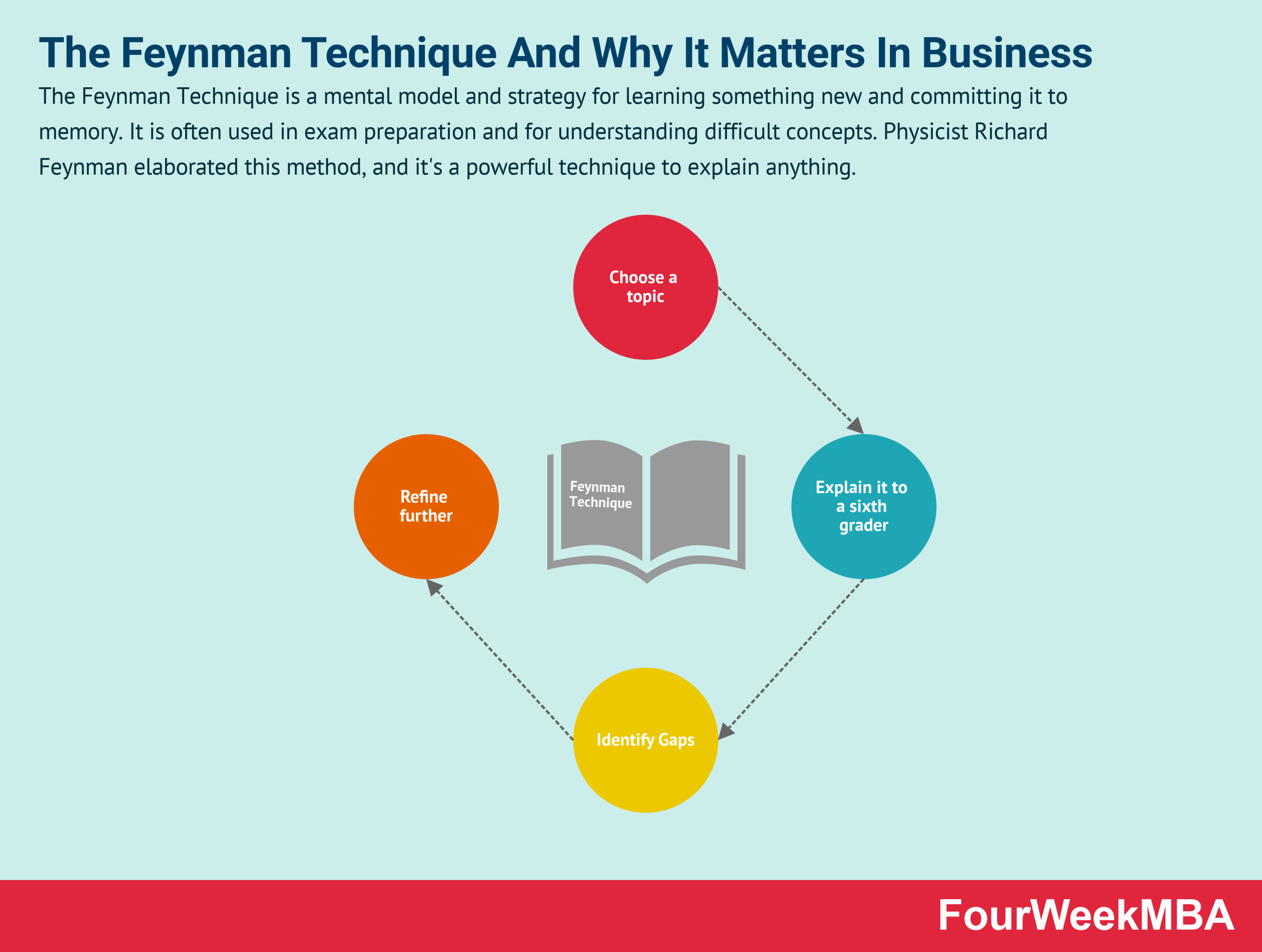
At its core, the Feynman Technique encourages learners to explain concepts in simple terms, as if teaching someone else. This method can be broken down into a few critical steps:
- Identify the Concept: Choose the subject or topic you wish to learn.
- Teach it: Explain the concept in your own words as if teaching it to a child or a newcomer.
- Review & Identify Gaps: Go back to your materials to find areas you couldn’t explain clearly. It’s here we often stumble; recognize these gaps.
- Simplify and Use Analogies: Break down complex ideas into simpler components and illustrate with analogies that make sense to you.
- Repeat the Process: Continue cycling through these steps until you feel confident about the topic.
This technique not only fuels a deeper understanding but significantly enhances retention, making revision far more effective.
Why It Matters
In a landscape increasingly dominated by rote memorization and passive learning, the Feynman Technique champions a robust approach toward meaningful comprehension. Research has shown that students who engage with material actively and critically are more likely to excel in exams. As you transition from passive recipients of information to active participants in the learning process, you're not only preparing for tests but solidifying your knowledge for the long term.
Benefits and Drawbacks
Benefits:
- Deeper Understanding: Forces learners to engage critically with material.
- Retention: Enhances memory through repetition and simplification.
- Confidence: Builds self-assurance in explaining complex concepts.
Drawbacks:
- Time-consuming: Initially may seem labor-intensive as it requires thorough understanding.
- Requires discipline: Consistency is key, and not everyone may maintain the motivation.
Real-Life Application: A Case Study
Consider the journey of Leena, a student struggling with complex calculus concepts. Initially overwhelmed, she discovered the Feynman Technique through a peer. Focusing on one concept at a time, she wrote down definitions and explained the principles aloud. By simplifying her notes and utilizing analogies—comparing calculus to building blocks—she tackled her fears.
Within weeks, her grades improved dramatically, and her newfound confidence led her to help classmates understand the material, reinforcing her knowledge further and deepening her understanding. Leena’s story exemplifies that effective learning methods are not merely academic tools but gateways to greater self-discovery and mastery.
Implications & Tips
For students aiming to take exams—be it standardized tests or finals—implementing the Feynman Technique can lead to a significant boost in performance. Here are some actionable tips:
- Pair with Group Study: Explaining concepts to peers can deepen your understanding. Interactive Study Techniques
- Practice in Real-Life Scenarios: Apply learning to everyday life situations to reinforce connections.
- Create Teaching Materials: Develop concise notes, diagrams, or flashcards as part of your review process.
"The key to lifelong learning is to imagine you are always the teacher." - Unknown
References & Links
With the Feynman Technique, the journey to mastering knowledge transforms from daunting to delightful. Embrace it, and watch your potential unfold!
Study Methods Effective Learning Student Tips Academic Success Teaching Techniques