

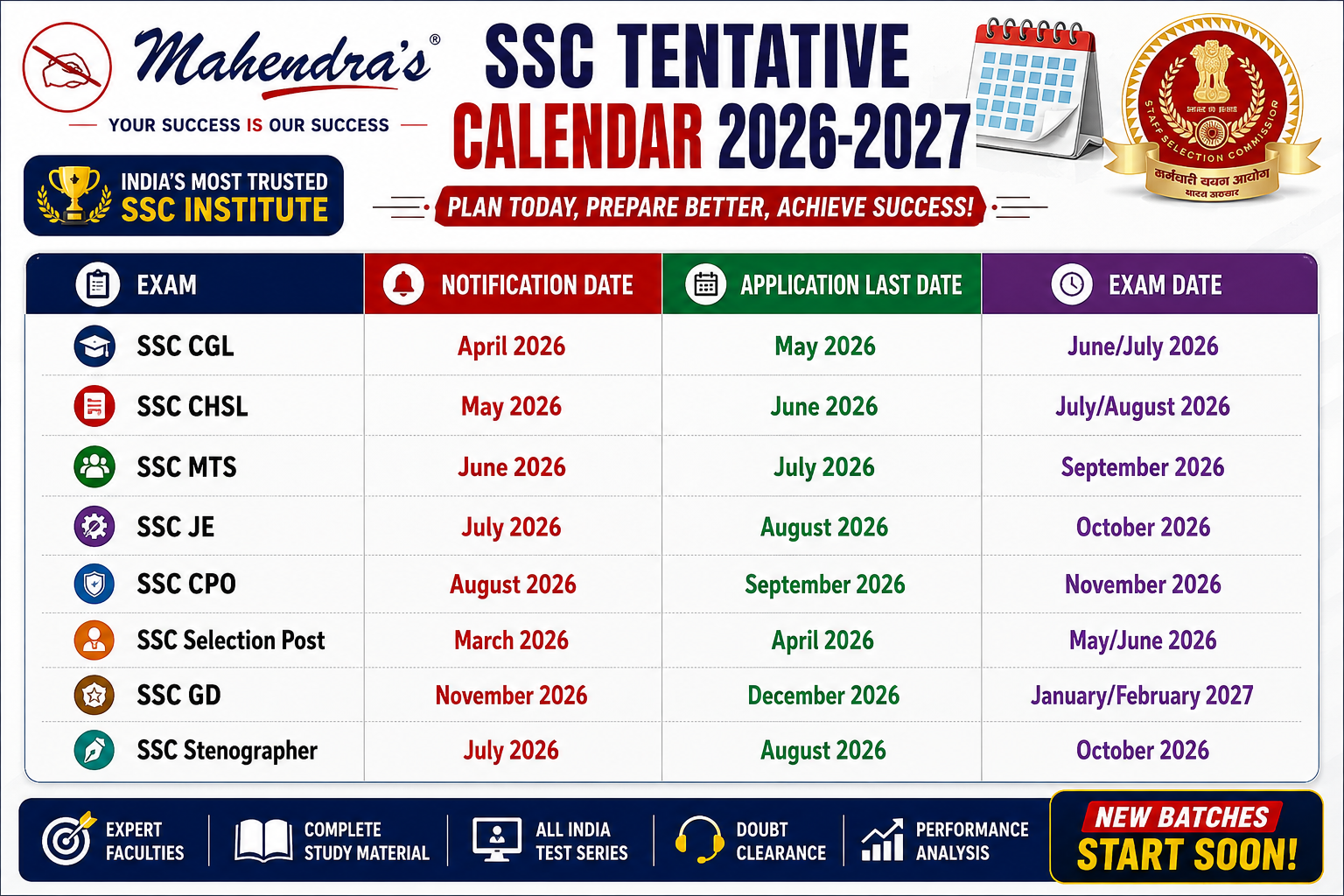
Track major competitive exam dates and deadlines for 2026.
Competitive Exam Calendar 2026: Key Exam Dates & Deadlines (Verify Official Portals)
A practical timeline to track major competitive exams in 2026—plus how to confirm notifications on official websites.
With 2026 progressing, students across India are increasingly asking the same question: “What are the important competitive exam dates and deadlines?” This article compiles a high-level exam calendar for key national-level competitive exams (and important related events like application windows and admit card releases).
However, exam schedules can change due to administrative reasons, so every date mentioned below should be treated as a planning checklist and verified from the official notification/portal before taking any action.
What’s Happening: 2026 Timelines Are Being Finalised Across Exams
Most Indian competitive exams release their calendar in parts—through official notifications, corrigenda, and updates on exam websites. For many exams conducted by NTA, UPSC, SSC, IBPS/RRB, and other agencies, the process typically follows a pattern:
- Notification release (exam details, eligibility, and syllabus links)
- Online application window (registration + submission)
- Fee payment window (if separate)
- Admit card (usually issued weeks before the exam)
- Exam date / shift / session
- Answer key / result
- Counselling / document verification (for selection-based stages)
For a step-by-step admit-card download walkthrough (example: BPSC Aedo), see: how to download BPSC Aedo admit card
Because each agency follows its own timeline, the most effective way to stay ahead is to follow an exam calendar workflow rather than rely on informal date lists.
Why This Exam Calendar Matters
For students, missing one deadline can mean:
- application rejection due to eligibility/document mismatch,
- late fee issues,
- inability to download the admit card within the validity window,
- loss of priority slot during counselling/choice filling.
Who is affected?
- Class 12 students who need clarity on CUET / entrance timelines
- Graduates targeting UPSC / SSC / banking exams
- Aspirants repeating attempts who must plan revision cycles and mock tests around actual exam dates
- Parents and teachers who help with document readiness and study scheduling
Key Dates & Deadlines to Track in 2026 (High-Level Checklist)
Below is a practical exam calendar checklist for the major exam ecosystem. Since official dates vary by year and notification, please confirm the exact 2026 dates from the links provided in References.
“An exam calendar isn’t just dates—it’s the system you use to avoid last-minute panic and to convert preparation into performance.”
1) CUET (UG) / University Admissions (NTA)
What to watch:
- CUET UG notification and application window
- correction window (if offered)
- admit card release
- exam dates and result declaration
How it affects you: CUET scores are used for admission into participating universities/UG programs. If you miss registration, you may lose admission opportunities for that cycle.
2) JEE Main (NTA)
What to watch:
- application windows for each session,
- admit card timelines,
- exam dates across sessions,
- results and challenge windows (where applicable).
How it affects you: JEE Main often influences next steps for JEE Advanced. A delay in one session can disrupt your full-year planning.
3) NEET (UG) (NTA)
What to watch:
- NEET application window,
- admit card availability,
- exam date,
- result/scorecard timelines.
How it affects you: For many aspirants, NEET calendar is the anchor point for coaching schedules and biology revision cycles.
For NEET-specific updates and what to verify after leak-related rumors, see: NEET Exam Leak 2026 Guide
4) UPSC Civil Services (UPSC)
What to watch:
- UPSC notification (typically for prelims)
- DAF (Detailed Application Form) timeline (for qualified candidates)
- stage-wise dates: prelims → mains → interview
How it affects you: UPSC requires early and long-term planning. Even one missed document stage can affect participation in subsequent rounds.
5) SSC (Staff Selection Commission) Exams
What to watch:
- SSC CGL / CHSL / MTS / CPO and other exam notifications (as per the cycle)
- application and fee payment deadlines
- admit card release dates
- tier-wise exam schedules (Tier 1, Tier 2, etc.)
How it affects you: SSC timelines are often tied to calendar-based recruitments. Candidates should track both the notification and the corrigendum.
6) IBPS / RRB Banking Exams
What to watch:
- IBPS/RRB recruitment notification(s)
- application window(s)
- admit card schedule
- preliminary and main exam timelines
How it affects you: Banking exams include multiple stages. If preliminary dates shift, mains/cut-offs planning can also shift.
A Simple Timeline Planning Method (Use This Every Month)
Instead of trying to remember exact dates from multiple sources, use a 90-day planning habit.
For a ready-made 90-day schedule and week-by-week blueprint you can adapt, see: 90-day exam blueprint
Month-to-month workflow
- First week of the month: check the agency websites for “Latest Updates”
- Every Sunday: verify if any corrigendum/notice is posted
- Mark three dates per exam:
- application deadline,
- admit card date (or release window),
- exam day
- Prepare documents early: ID proof, photograph specs, category certificates (if applicable), and any disability certificates (if applicable)
- Create a backup folder (Google Drive/Cloud) with scanned PDFs
Mini case study (common student scenario)
Riya, a Class 12 student, planned for an entrance exam based on a social media post. On the actual notification day, she noticed that the application window had a different start date. Because she had kept her documents ready (photo in correct dimensions, ID card scanned, and fees budgeted), she completed registration within the official timeline.
Her takeaway: the exam calendar is only useful when tied to official confirmation.
What Students Should Do Next (Action Points)
For students & aspirants
- Verify every date using the official portal linked in References.
- Set reminders at least 10 days before application deadlines and admit-card dates.
- Download and save all PDFs (notification, application confirmation, payment receipt).
- Check eligibility carefully (age limits, qualification, number of attempts where applicable).
- Avoid “date-forwarding” misinformation: only trust official press releases/notices.
For parents and teachers
- Maintain a document readiness checklist for students (ID, category/caste certificates where applicable, photographs).
- Encourage students to follow one official source per exam agency rather than multiple unofficial aggregators.
- Plan a realistic revision schedule that accounts for admit-card and exam-day travel/prep.
How to Track Notifications Without Missing Anything
Use an “exam calendar hub” approach:
- Bookmark official sites: NTA, UPSC, SSC, IBPS, RRB
- Turn on browser alerts or subscribe to official email/SMS where available
- Save the official notification URL after the announcement
- Check the website’s “Notice / Corrigendum / Update” section weekly
References (Official Portals to Verify Exam Dates)
- NTA Official Website
- UPSC Official Website
- SSC Official Website
- IBPS Official Website
- RRB Official Website (RRB/CDG/All Regional Portals)