

A practical 30-day program combining active recall, spaced repetition, and targeted practice to help students master difficult subjects quickly. Includes daily exercises, tracking templates, and progress checkpoints for measurable improvement.
Mastering the Art of Learning: Active Recall & Spaced Repetition in 30 Days
Unlock your potential with this practical plan designed to enhance memory and understanding of difficult subjects through proven study techniques.
In the fast-paced world of academia and professional development, mastering tough concepts quickly is crucial. Enter the 30-day program that utilizes active recall and spaced repetition—two powerful study techniques that enhance memory retention and boost academic performance. This blog will explore how you can leverage these methods effectively to transform your learning experience while providing any necessary tools for success.
Understanding Active Recall and Spaced Repetition
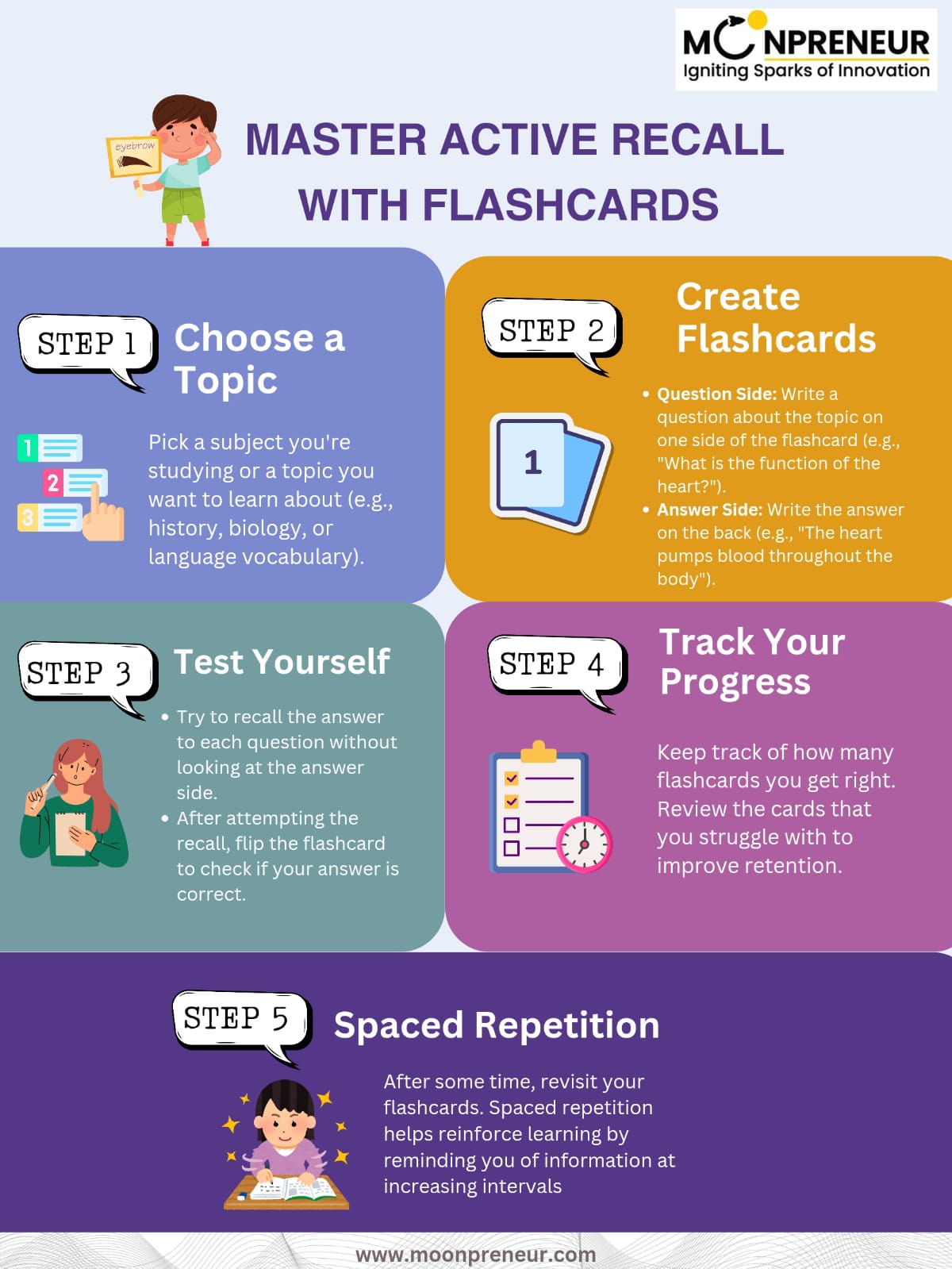
Active recall is a technique that involves actively stimulating memory during the learning process. Instead of passively reviewing notes, students engage with the material by attempting to recall information without looking at their sources. Studies suggest that this method significantly improves retention and understanding. For more “how-to” practice, see active recall practice.
On the other hand, spaced repetition involves spreading out your study sessions over time. By reviewing material at increasing intervals, you reinforce what you've learned, making it easier to retrieve information when needed. Together, these two strategies create a robust framework for mastering complex subjects.
The 30-Day Study Plan
Incorporating these techniques into a structured 30-day study plan can transform your approach to learning. Here’s a sample breakdown of daily exercises and techniques:
- Week 1: Assess & Gather Resources
- Day 1: Identify your subject and key topics.
- Day 2: Gather quality resources (books, articles, videos).
- Day 3: Outline your study schedule, allocating time for each topic.
- Week 2: Active Recall Implementation
- Day 8: Start a flashcard system. Create cards for key concepts and definitions.
- Day 9: Dedicate study time to quizzing yourself using these flashcards.
- Day 10: Join a study group to practice teaching others—a powerful way to reinforce what you’ve learned.
- Week 3: Spaced Repetition Technique
- Day 15: Review your flashcards from Week 2. Focus on those you struggled with.
- Day 16: Introduce new materials while reiterating old concepts. Use software tools like Anki to aid in spaced repetition.
- Day 17: Conduct a self-assessment to identify weak spots.
- Week 4: Application through Practice
- Day 22: Engage in targeted practice sessions—practice problems that align with your learnings. If you want a repeatable way to convert practice into score gains, pair this with active mock review.
- Day 24: Simulate exam conditions by taking practice tests. Reflect on your performance and areas needing improvement.
- Day 30: Final review. Reflect on your overall learning and re-test yourself on challenging concepts.
Case Study: John’s Transformation
Let’s bring this program to life with the story of John, a graduate student who struggled in his statistics course. Frustrated by poor grades, he decided to implement the 30-day program.
- Assessment & Goal Setting: John began by pinpointing the specific concepts he found challenging—probability and regression analyses.
- Active Recall Implementation: Utilizing flashcards, he would quiz himself daily. By Week 2, John reported improved feelings of confidence.
- Spaced Repetition: By adhering to a spaced repetition system, John retained the information more effectively—his exam scores began to reflect his hard work.
- Targeted Practice: By the final week, John simulated test scenarios that helped him understand how to apply concepts in real-world situations. With continued dedication, he achieved an A in his course.
Implications & Tips
For students and job-seekers, these strategies can not only improve your understanding of difficult subjects but also cultivate a deeper sense of discipline and active engagement in your studies. Key tips include:
- Stay Consistent: Even on your busiest days, ensure you spend at least 20 minutes revisiting materials, using active recall.
- Track Progress: Use progress-tracking templates to visualize your journey. This will keep you motivated as you see improvement.
- Practice Self-Reflection: After each session, take a moment to reflect on what you learned and how you can improve. Self-reflection is key to effective learning.
If you need a confidence boost to stay consistent through tough weeks, check quiet wins build momentum.
“The mind is like a garden; if you don’t cultivate it, the weeds will grow.”
References & Links
exam strategies memory techniques learning methods student success study tips